


In implementation of the “National Plan for the Protection of Information Infrastructures” (NPSI) adopted by the German federal government in 2005, the BMI and the BSI have developed the “KRITIS Implementation Plan” in collaboration with major German infrastructure companies and interest groups, all of which are highly dependent on IT systems. The BSI defines the term “critical information infrastructure” as both the information and communication technology (ICT) sector and the ICT-based infrastructures of other sectors.
This law obliges operators of critical infrastructures to adequately secure the IT required for the provision of their important services in accordance with the state of the art.
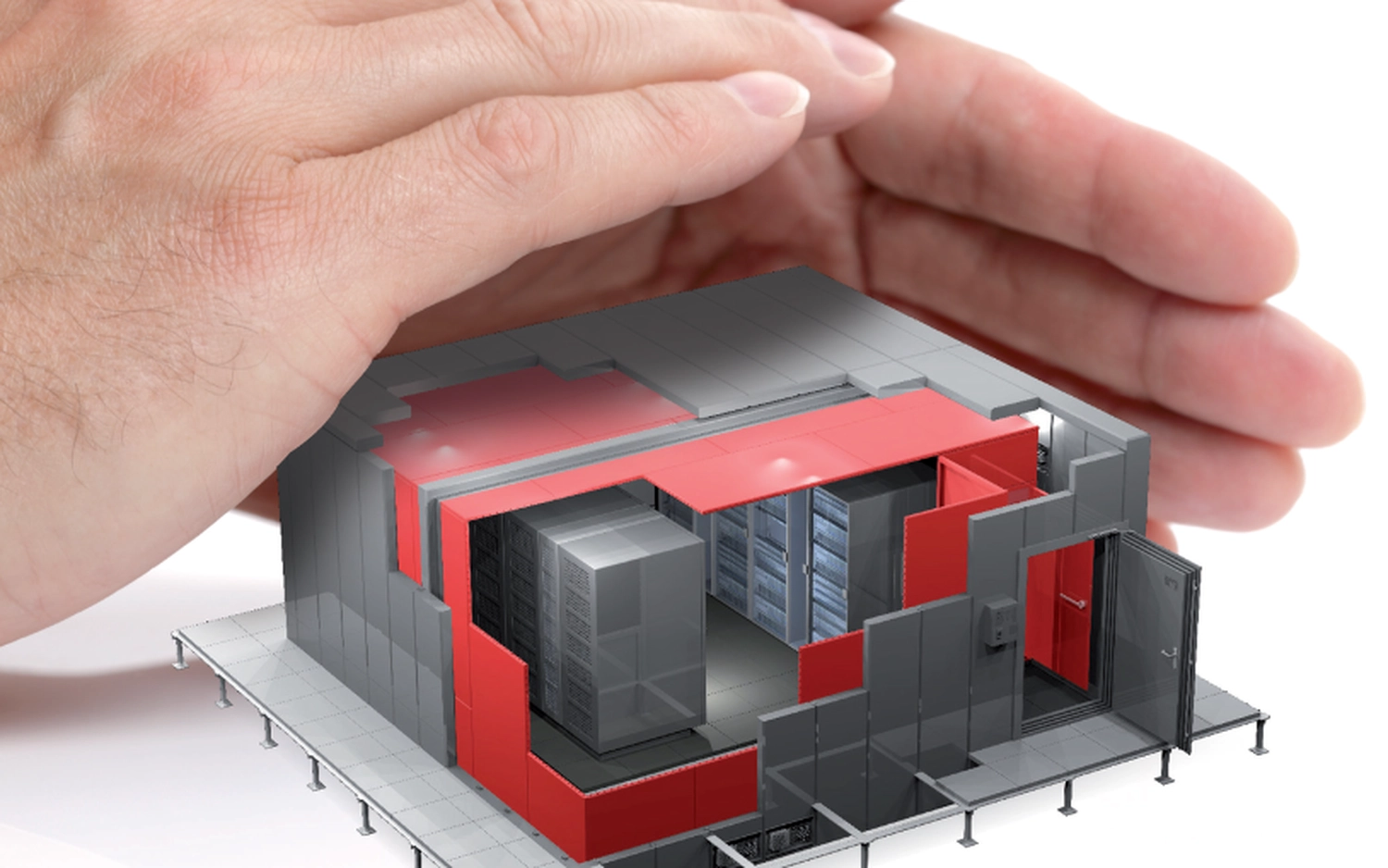
EMshield's radiation-proof IT rooms meet maximum protection requirements against electromagnetic weapons (HPM/EMP). The basis is electromagnetic shielding with a shielding attenuation of > 100 dB from 10 MHz. It is assembled from sheet steel modules. Access is via knife-edge contact doors (airlocks), optionally with an electric motor drive.

Shielded cabins made of copper or steel sheet modules are used for the highest requirements in terms of security and electromagnetic shielding attenuation. This allows shielding attenuation values > 100 dB to be achieved.
The architectural design options are significantly limited here. These cabins are implemented as rooms within rooms, and window solutions are limited. The selection of doors, wall coverings, and floor coverings is limited. These systems are used in particular in high-security zones in the public sector.

Bretonischer Ring 12
85630 Grasbrunn